How to find YouTube creators for a product launch
A step-by-step way for brands to shortlist YouTube creators for a launch, judge them on median views and fit, pitch them and get disclosure right.

7 min read
A launch has a date. You need a shortlist of creators whose viewers are your buyers, a fair idea of what each costs, and enough time for them to make a good video. Here's how to build it.
Who exactly are you trying to reach?
Write the buyer down before you search. "Developers" is too broad. "Backend developers at small startups who are picking a database for the first time" tells you which videos to look for and which channels to skip.
Then pick one goal for the launch, because it changes who you choose:
| Goal | What you want | Who tends to fit |
|---|---|---|
| Most views | The lowest cost per 1,000 views | Mid-size creators with steady views |
| Sign-ups and sales | Clicks and conversions | Creators whose audience is closest to your buyers, even small ones |
| Brand awareness | Placements people remember | Fewer, bigger, recognisable creators |
| Test and learn | Learn which audiences work | Several smaller creators before you scale |
Scroll sideways to see every column.
Where do you find the right creators?
1. Search YouTube the way your buyer would
Open a private window, so your own history doesn't skew the results, and search for the problems your product solves: "how to [task]", "[competitor] alternative", "best [category] for [audience]". Note every channel that shows up more than once. Those creators already rank for your buyer's questions.
2. Find who your competitors already sponsor
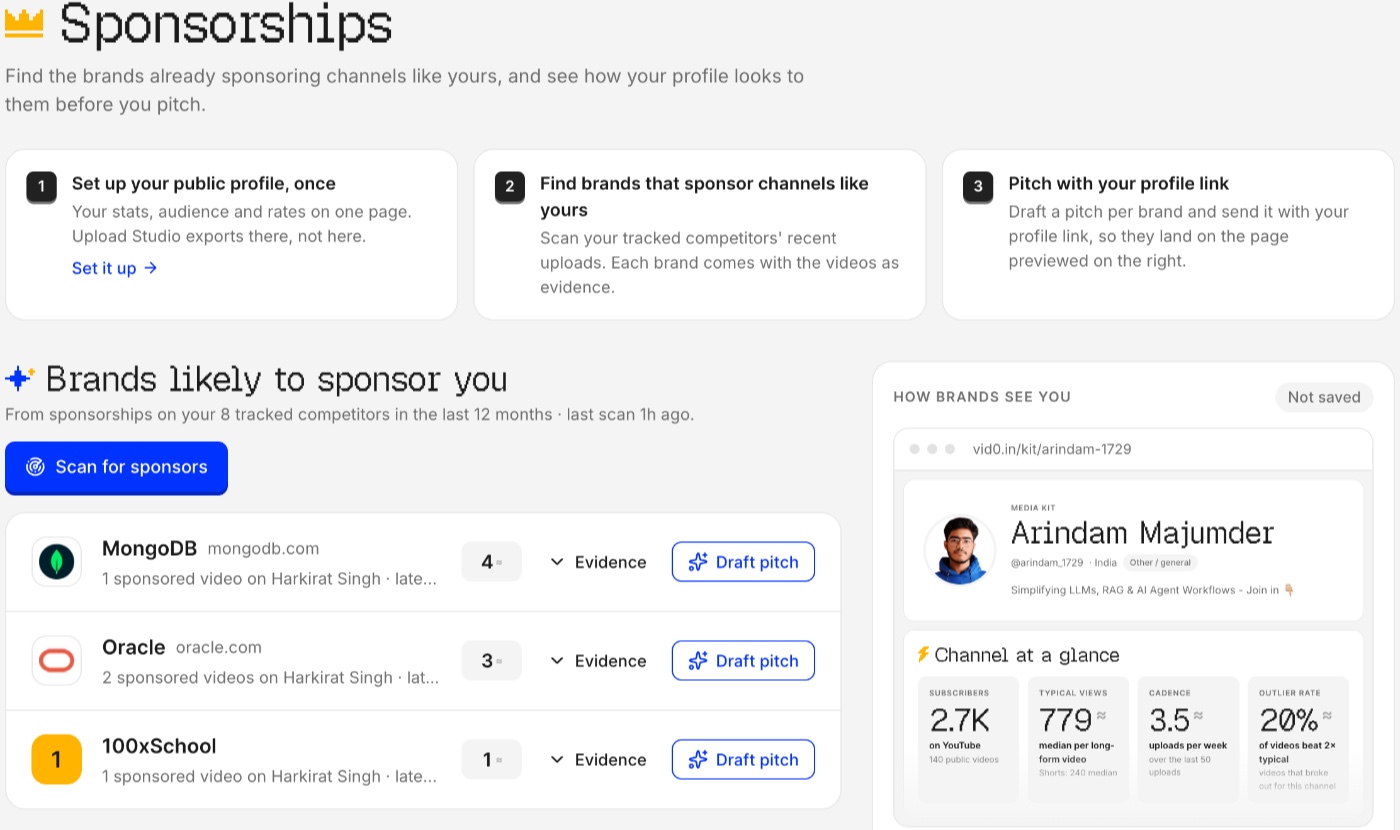
A creator who ran a competitor's segment has an audience that buys in your category and is open to sponsorships. Search "[competitor name] sponsored" on YouTube, check the descriptions for tracking links and promo codes, and look for YouTube's paid promotion disclosure on the video.
Vid0 scans creators' recent uploads for these signals (sponsor phrases, promo codes, tracking links and the paid promotion flag) and lists the brands with the videos as evidence:
3. Shortlist creators whose videos are breaking out
A creator whose recent videos beat their own typical views is growing. Look for outliers on your topic: videos at 2× or more of the channel's usual views at the same age. Here's how to find outlier videos.
How do you evaluate a YouTube creator?
Four checks, in this order.
Median views, not subscribers
Subscribers tell you how many people once clicked a button. Views tell you how many will see your segment. Use the median views of recent long-form videos, so one viral hit doesn't inflate the number. The average can mislead badly:
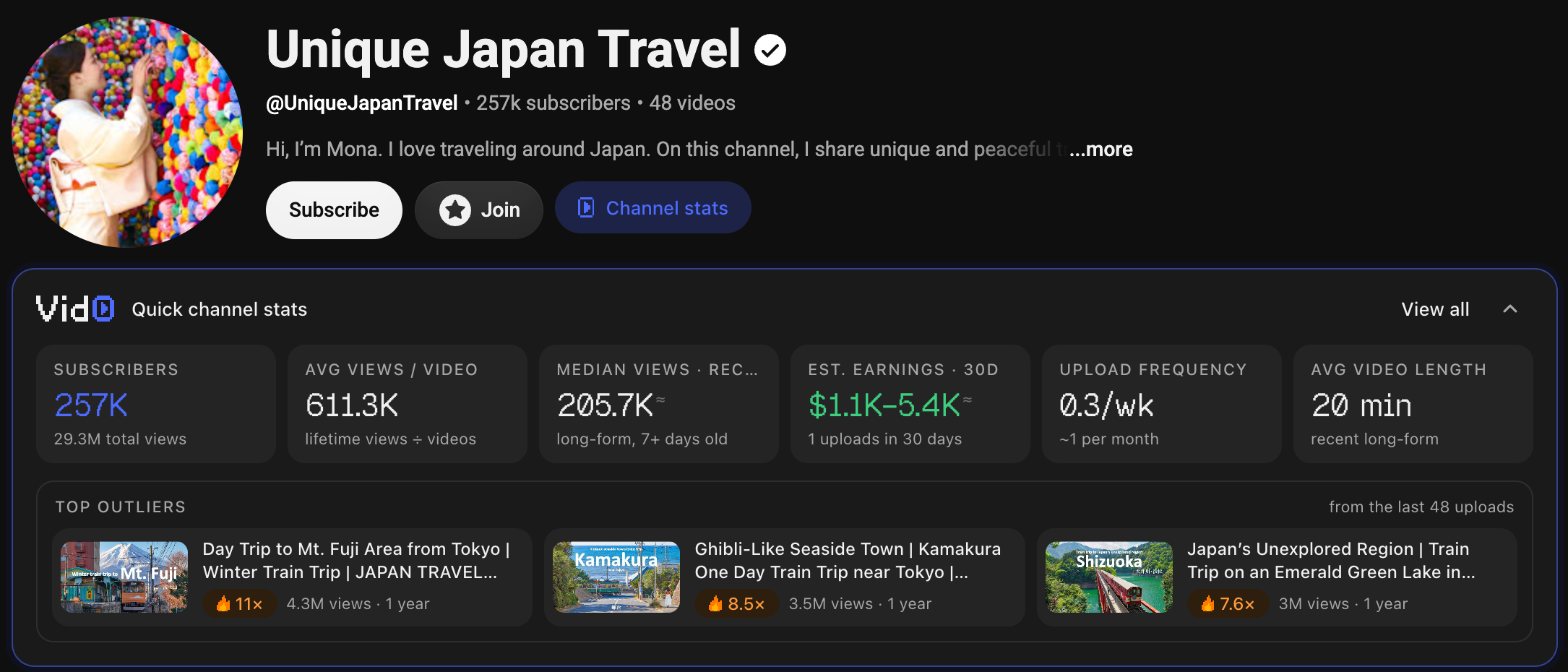
611.3K ÷ 205.7K is about 3. Pay on the average and you pay for three times the views you're likely to get.
Audience fit
Watch two or three recent videos and read the comments. Are these people your buyers? Real questions about the topic are a better sign than a wall of emoji. Ask the creator for an audience breakdown from YouTube Studio (age, countries, devices), and treat it as self-reported unless they can verify it.
Sponsor history
Past sponsors show the creator is used to working with brands, and which categories trust their audience. Watch one past integration. Was it natural? How did viewers react in the comments?
Consistency
When did they last upload, and how often? A launch needs a video out in a known window. A creator who uploads once a month can still be a great fit, but plan the timeline around it.
How do you reach out and agree a price?
Keep the first message short: what you sell, why their audience, the format you want and your launch window. Then agree in writing:
- Deliverables: format, length, talking points, links and any promo code.
- Timeline: script or outline due date, publish date, and how many review rounds.
- Usage rights and exclusivity: whether you can reuse the clip in ads, and for how long they won't work with competitors. Both cost extra.
- Disclosure: how it will be labelled (see below).
- Payment: amount, currency and when you pay.
Price from typical views, not subscribers: typical views ÷ 1,000 × a CPM band for the niche. The full method, with bands by niche, is in how much to charge for a YouTube sponsorship, and the brand-side budget maths is in how much YouTube influencer marketing costs. Don't ask for guaranteed views. Price the deliverable and use typical views as context.
What disclosure rules apply to sponsored YouTube videos?
Disclosure protects you as much as the creator. The main rules, from the sources themselves:
- YouTube asks creators to tell it about paid promotion in YouTube Studio, which adds a disclosure label at the start of the video. See YouTube's Help page on paid product placements and endorsements.
- US (FTC): the FTC's Disclosures 101 for social media influencers says to disclose any financial, employment, personal or family relationship with a brand, including getting anything of value. For video, the disclosure should be in the video, not just in the description, and terms like "ad" and "sponsored" are clear. It notes viewers are more likely to notice disclosures made in both audio and video, and says not to assume a platform's disclosure tool is good enough on its own.
- India (ASCI): ASCI's influencer disclosure guidelines require disclosure for any material connection, including free products, discounts or perks. Labels such as Advertisement, Ad, Sponsored, Collaboration or Partnership are permitted, and on video the label must be superimposed and visible. Disclosures can't be hidden in bios, at the end of posts or among hashtags.
Put disclosure in the brief and the contract. This is a summary, not legal advice: check the current rules for each country you target.
How does Vid0 for brands work?
Vid0 for brands turns the steps above into one flow:
- Describe your product. What it does and who it's for. AI turns it into a brief: category, audience, search keywords and competitors.
- Get matched creators. Each one is scored on five factors from public data: topic fit (including where they rank for your brief's keywords), sponsor history (with extra weight for sponsoring a competitor), expected views per dollar, size and how active they are. Creators on Vid0 come first, with full stats.
- Request the ones you like. Requests go through the Vid0 team, who confirm rates and timing with each creator and make the intro. Creator emails never appear on Vid0.
A few details worth knowing:
- Expected views are the median views of a creator's recent long-form uploads that are at least 30 days old, the same number used in this post.
- Prices are the creator's own rates or, for creators who haven't set any, a Vid0 estimate from expected views. Final terms are agreed with the creator before anything is booked.
- Creators who aren't on Vid0 are marked "Not on Vid0 yet". You can still request them, and the Vid0 team reaches out for you.
- Campaign planner: give a budget, a goal (most views, sign-ups and sales, brand awareness, or test and learn) and the creator sizes you want, from Rising (under 10K subscribers) to Top (500K+), and it suggests creator mixes that fit. Or share your budget and goals and the Vid0 team builds the campaign with you.
Brand searches are metered by plan, as listed on Vid0 pricing. If brand sign-up isn't open yet when you read this, the brands page has a waitlist.
FAQ
How do I find YouTubers to promote my product?
Search YouTube for the problems your product solves, check which channels your competitors sponsor, and look for creators whose recent videos beat their usual views. Shortlist the ones whose audience matches your buyer.
How far ahead of a launch should I contact creators?
Leave enough time for the creator to script, film, get your review and publish on their normal schedule. A creator who uploads monthly needs more notice than one who uploads weekly, so ask about their timeline in the first message.
Do sponsored YouTube videos have to be disclosed?
Yes. YouTube asks creators to mark paid promotion in YouTube Studio, the FTC says the disclosure should be in the video itself, and ASCI requires a clear label for any material connection, free products included.
Can I contact creators directly through Vid0?
No. Requests go through the Vid0 team, who check fit, confirm rates and timing and make the intro. That includes creators who aren't on Vid0 yet.
Create your creator profile today
Your stats, rates and past collabs on one link, like vid0.in/@yourchannel. Share it with brands and get booked.
Keep reading
All posts →- GrowthResearch
How to get your first 1,000 YouTube subscribers
Ten steps for new channels. Learn from channels your size, package before you film, win the first 30 seconds and judge every upload against your usual.
8 min read
- ComparisonsResearch
10 vidIQ alternatives compared (2026): free and paid
10 vidIQ alternatives compared on price, free plans and features, from Vid0 and TubeBuddy to 1of10, ViewStats and OutlierKit, with October 2026 prices.
13 min read
- ExtensionProduct
The Vid0 Chrome extension is live: free YouTube analytics on every page
Vid0's free Chrome extension is live. Outlier scores, views per hour, keyword odds, tags and channel stats on YouTube, plus a YouTube Studio assistant.
11 min read
Find your next outlier
Vid0 shows which videos broke out in your niche, why they did, and what you could make next.